
|
The 15th International Topical Meeting on Nuclear Reactor Thermal-Hydraulics, Operation, and Safety NUTHOS-15 Shaping the Future of Next-Generation Nuclear Energy September 27 - October 2, 2026. Kashiwa-no-ha, JAPAN |
|
|
The 15th International Topical Meeting on Nuclear Reactor Thermal-Hydraulics, Operation, and Safety NUTHOS-15 Shaping the Future of Next-Generation Nuclear Energy September 27 - October 2, 2026. Kashiwa-no-ha, JAPAN |


NUTHOS-15 will feature three special panel sessions bringing together experts from industry, research institutions, universities, and international organizations to discuss key issues shaping the future of nuclear engineering. The panels will address emerging thermal-hydraulic challenges, the rapidly expanding role of AI and digital transformation, and worldwide progress in advanced reactor deployment.
Wednesday, September 30, 2026 | 17:00–18:20
The three panel sessions will be held in parallel.
Emerging Thermal Hydraulic Challenges in Reactor Operation and Safety
Room 5
Dr. Jean-Marie Le Corre (Westinghouse)
Dr. Jinzhao Zhang (Tractebel)
Dr. Hidemasa Yamano (JAEA)
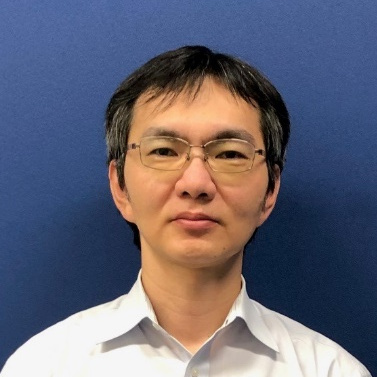
Mr. Daichi Yamada (TEPCO)
Bio:
Mr. Daichi Yamada is a Nuclear Engineer at Tokyo Electric Power Company Holdings (TEPCO), Japan. He holds a master’s degree in Nuclear Engineering from Kyoto University and is nationally qualified in Japan as a Chief Engineer of Reactors. From 2015 to 2018, he served as a resident researcher at the Electric Power Research Institute (EPRI) in the United States. At TEPCO, He has been involved in fuel design, fuel management, and reload core analysis for Boling Water Reactors. He has also contributed to investigations of the Fukushima Daiichi accident, including studies of accident progression and thermal-hydraulic phenomena in reactor containment and suppression chambers. From 2023 to 2026, he worked at Kashiwazaki-Kariwa Nuclear Power Station and contributed to the restart of Unit 6 (ABWR).
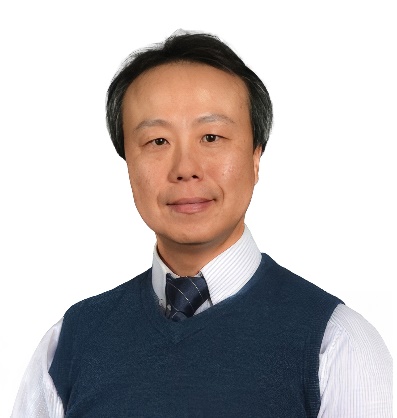
Dr. Yong-Joon Choi (EPRI)
Bio:
Dr. Yong-Joon Choi is a Principal Technical Leader at the Electric Power Research Institute (EPRI), USA, specializing in nuclear thermal-hydraulics, reactor safety, and advanced reactor technologies. He holds a Ph.D. in Nuclear Engineering from Université de Marne-la-Vallée, France. At EPRI, he leads activities related to the GOTHIC code and thermal-hydraulic analysis and supports international research and development collaborations in nuclear safety and reactor technology. Before joining EPRI, Dr. Choi held positions at Idaho National Laboratory (INL), the OECD Nuclear Energy Agency (OECD/NEA), the Korea Atomic Energy Research Institute (KAERI), and Korea Hydro & Nuclear Power (KHNP). His experience spans research, safety analysis, code development and application, and international coordination in support of safe and reliable nuclear reactor operation.
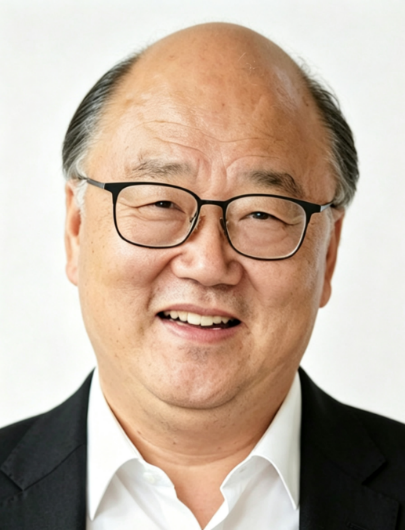
Dr. Jinzhao Zhang (Tractebel)
Bio:
Dr. Jinzhao Zhang is Technical Director and Top Expert at TRACTEBEL (ENGIE), Belgium. He holds a Ph.D. in Mechanical Engineering from UCLouvain and has over 40 years of experience in nuclear engineering, R&D, and consulting, including roles at SCK CEN, UCLouvain, and Westinghouse. At TRACTEBEL, he leads activities in reactor thermal‑hydraulics, fuel design, safety analysis, and licensing, with particular emphasis on advanced technology fuels qualification, SMR fuels design and safety evaluation, multi‑physics code validation, and BEPU methodologies. Dr. Zhang has also contributed to OECD/NEA and IAEA safety research activities on thermal hydraulics and fuel safety since the 1990s, and has led many major international projects, including NEA SAPIUM, RIA Benchmark, RBHT, DEC‑A, and SMR Fuel, as well as IAEA CRPs FUMAC and ATF‑TS. He currently serves as Chair of the IAEA Technical Working Group on Fuel Performance and Technology (TWGFPT) and Vice‑Chair of NEA Working Groups on the Analysis and Management of Accidents (WGAMA). He has authored over 100 technical publications and received the NURETH Scholar Award (2025).
Dr. Ju Yeop Park (KINS)
Bio:
Dr. Ju Yeop Park is Regulatory Research Leader in the Safety Analysis Department at the Korea Institute of Nuclear Safety (KINS), Republic of Korea. He specializes in nuclear reactor safety, thermal-hydraulic analysis, and regulatory methodologies for advanced reactors and passive safety systems. At KINS, he leads research on integrated safety-analysis capabilities, passive-system reliability, long-term cooling, and uncertainty in thermal-hydraulic system codes. Before his current role, Dr. Park served as a nuclear safety specialist at the OECD Nuclear Energy Agency (OECD/NEA), supporting international activities related to new-reactor regulation and nuclear safety. His experience also includes regulatory reviews of reactor core thermal-hydraulic design, fuel designs, critical heat-flux correlations, and safety-analysis codes such as SPACE
AI and Digital Transformation for the Future of Nuclear Engineering
Room 6
Dr. Shuichiro Miwa (The University of Tokyo)
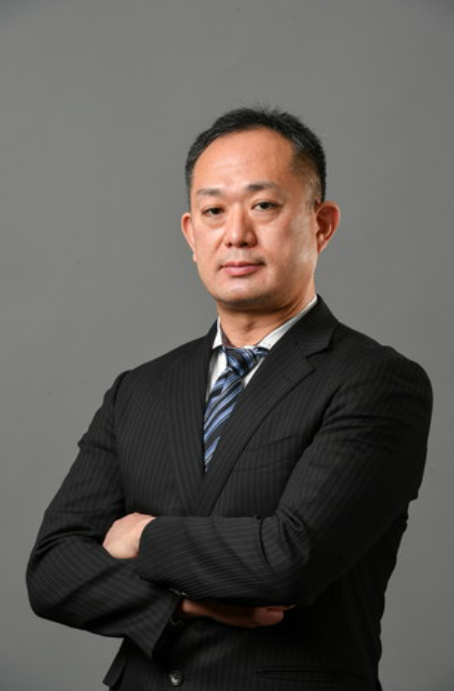
Dr. Kazuyuki Demachi (The University of Tokyo)
Bio:
Dr. Kazuyuki Demachi is a Project Professor in the Nuclear Professional School, Graduate School of Engineering, at the University of Tokyo. His research focuses on applying artificial intelligence and deep learning to nuclear safety, nuclear security, and plant maintenance. His work encompasses equipment fault detection and diagnosis, predictive maintenance, and image-based recognition of human behavior to enhance safety and security at nuclear facilities. His current research also explores generative AI for maintenance documentation, AI-based assistance for workers, and three-dimensional modeling to support nuclear decommissioning. Through these activities, he develops practical applications of AI and digital technologies to strengthen monitoring, maintenance, and decision support in nuclear engineering.
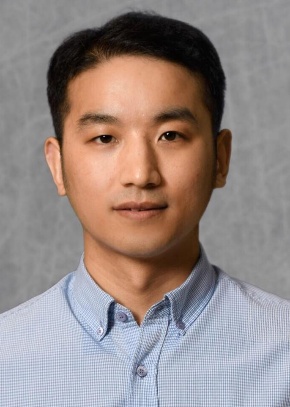
Dr. Xu Wu (North Carolina State University)
Bio:
Dr. Xu Wu is an Associate Professor of Nuclear Engineering at North Carolina State University. His research focuses on nuclear thermal-hydraulics, uncertainty quantification, scientific machine learning, and generative artificial intelligence. His work encompasses Bayesian inverse modeling, critical heat flux prediction, and the integration of machine learning into thermal-hydraulic analysis codes, with particular emphasis on verification, validation, and uncertainty quantification to establish the predictive credibility of AI for nuclear applications. He received his Ph.D. in Nuclear Engineering from the University of Illinois at Urbana-Champaign in 2017 and conducted postdoctoral research at the Massachusetts Institute of Technology before joining NC State in 2019. Dr. Wu was awarded the DOE Office of Nuclear Energy Distinguished Early Career Program in 2024. He received the American Nuclear Society’s 2026 Landis Young Member Engineering Achievement Award and 2026 Bal-Raj Sehgal Memorial Award in recognition of his contributions to uncertainty quantification and machine learning methodologies for nuclear systems, especially computational reactor thermal-hydraulics.
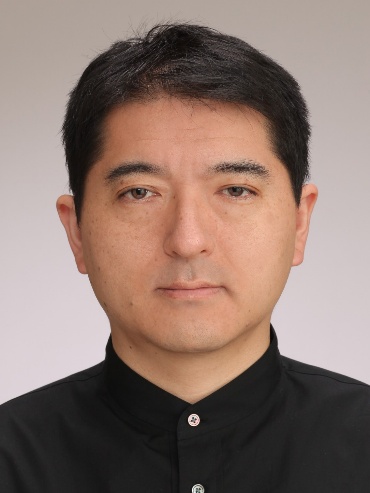
Dr. Kenichi Katono (Hitachi, Ltd.)
Bio:
Dr. Kenichi Katono is Senior Manager of the Nuclear Energy Systems Research Department at the Environment and Energy Nexus Innovation Center, Research & Development Group, Hitachi, Ltd. His expertise spans nuclear thermal-hydraulics, reactor safety, and numerical simulation, with contributions to the development and evaluation of advanced reactors, including the BWRX-300 small modular reactor. His research encompasses natural-circulation evaluation, gas–liquid two-phase flow, and the validation of thermal-hydraulic models supporting reactor design and safety assessment. In his current leadership role, he oversees research addressing nuclear safety, advanced reactor technologies, and digital transformation for nuclear power plants, bringing an industry perspective on the opportunities and challenges of applying AI and digital technologies in nuclear engineering.
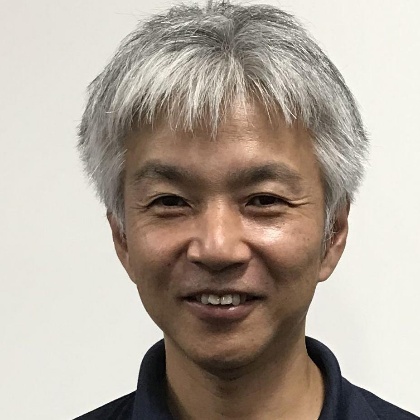
Dr. Mitsuhiro Itakura (JAEA)
Bio:
Dr. Mitsuhiro Itakura is General Manager of the AI/DX Research and Development Office at the Center for Computational Science and e-Systems, Japan Atomic Energy Agency (JAEA). His expertise lies in computational materials science, with a focus on first-principles calculations, atomistic modeling, and the behavior of defects and dislocations in nuclear fuels and structural materials. His research includes the development and application of machine-learning interatomic potentials and molecular dynamics methods to investigate material properties, including the high-temperature behavior of oxide nuclear fuels. In his current leadership role, he oversees research on computational technologies for nuclear materials and environmental processes, supporting advanced reactor development, decommissioning, and Fukushima environmental recovery through the integration of physics-based simulation and AI-driven methods.
SMR/AMR/MMR: Global Progress, Deployment and Future Prospects
Room 1+2
Dr. Bao-Wen Yang (Delta Energy Group, New York, DEGNY)
Dr. Martina Adorni (OECD Nuclear Energy Agency)
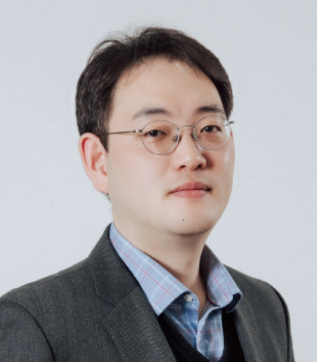
Dr. Jeong Ik Lee (KAIST)
Bio:
Dr. Jeong Ik Lee is an Endowed Chair Professor in the Department of Nuclear and Quantum Engineering at the Korea Advanced Institute of Science and Technology (KAIST), South Korea. His research focuses on nuclear thermal-hydraulics and systems engineering, with particular interests in small modular and microreactors, supercritical carbon dioxide power cycles, and thermal energy storage. His work also encompasses digital twins for reactor systems and machine-learning applications to nuclear safety, including the prediction of severe accident progression. He received his bachelor’s degree from Seoul National University in 2003 and his master’s and doctoral degrees from the Massachusetts Institute of Technology (MIT) in 2005 and 2007, respectively. Since joining KAIST in 2010, he has held visiting appointments at Khalifa University, the University of Cambridge, and MIT. He also serves as an Advisory Editor of Annals of Nuclear Energy.
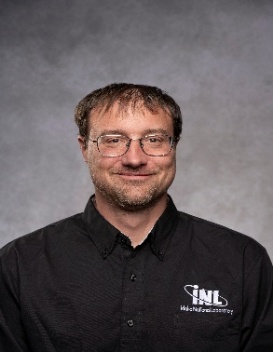
Dr. Aaron S. Epiney (INL)
Bio:
Dr. Aaron Epiney is the RELAP5-3D Program Manager at Idaho National Laboratory (INL), where he manages the technical and business direction of INL's system thermal-hydraulics safety code. He holds a Ph.D. in Physics from the École Polytechnique Fédérale de Lausanne (EPFL), Switzerland. Over more than 15 years at INL and the Paul Scherrer Institute, Dr. Epiney has led thermal-hydraulic safety analysis, code development, and verification and validation (V&V) efforts supporting advanced reactor deployment, including gas-, sodium-, and heat-pipe-cooled microreactor testing at INL's TREAT facility. He leads the international OECD/NEA benchmark for the High Temperature Test Facility at Oregon State University, a key validation effort for high-temperature gas-cooled SMR concepts. He previously served as Modeling and Simulation Lead for DOE's Integrated Energy Systems program. Dr. Epiney has authored over 80 journal papers, conference papers, and technical reports, and is the past chair of the American Nuclear Society's Nuclear Installations Safety Division (NISD).
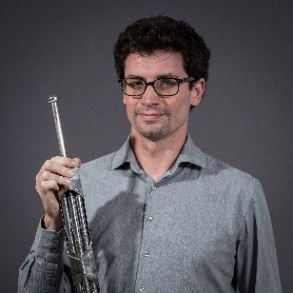
Dr. Antoine Gerschenfeld (Director General / Directeur Général, Stellaria Design)
Bio:
A graduate of the Ecole Nationale Supérieure d'Ulm (ENS) with a thesis in theoretical physics, Antoine joined the CEA in 2013. He has worked in thermohydraulics on innovative reactor projects: ASTRID (sodium), NUWARD (pressurised water) and ARAMIS (molten salts). Within the CEA, he contributed to the development and validation of codes needed to simulate neutronic and thermohydraulic phenomena in molten salt reactors. He has been involved in bilateral international collaborations with the USA, Japan, Russia and China, and multilateral collaborations with the IAEA, OECD and EURATOM. He is the co-founder and CTO of Stellaria.
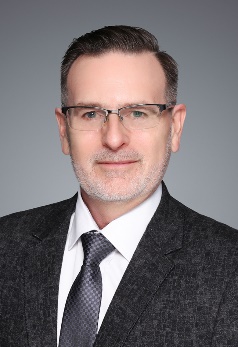
Dr. Scott Roberts (Chief Engineer Asia, Westinghouse Electric Company, LLC)
Bio:
45 years of nuclear experience in all areas of the nuclear lifecycle for nuclear power and decommissioning specializing in operations, maintenance, decommissioning, fuel, and instrumentation and control technology. Certified plant operator and systems engineer at Diablo Canyon and Beaver Valley. Provided leadership for decommissioning projects at the West Valley Demonstration Project and Hanford sites. Lean-six-sigma leader for Westinghouse’s fuel manufacturing system. President of Westinghouse’s CS Innovations LLC - licensed the first US FPGA based safety control system. Currently leading technical solutions for all aspects of nuclear power throughout Asia and key areas of Fukushima decommissioning.
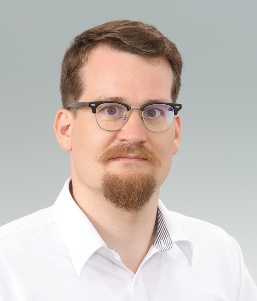
Dr. Antonin Povolny (Hitachi GE Vernova Nuclear Energy)
Bio:
Dr Antonin Povolny works as a Thermal-hydraulics engineer/reactor system designer as well as a project manager for SMR deployment projects.
He has dedicated the past seven years to working on the BWRX-300 SMR, supporting its progression from early concept studies through R&D, detailed design and licensing to the current construction stage.
Led efforts to validate the performance of natural circulation in the reactor vessel through large-scale testing, as well as testing the performance of steam separators and developing advanced separator design. Led the design of several reactor components as a thermal-hydraulics authority, ensuring the design meets the necessary requirements, including those unique to a natural circulation reactor, while meeting cost and manufacturing lead-time targets.
His work includes project risk management activities, coordinating licensing and engineering work as well as engineering efforts targeting further design optimization in future nth-of-a-kind plants.

